Topic: Economic Development

Land Wise
Announcement
Aerial photo of Mar Vista Farmers Market in Los Angeles, California.

Center for Impact Finance Announces Affiliation with Lincoln Institute of Land Policy

By Kristina McGeehan, May 5, 2026

The Lincoln Institute of Land Policy today announced the Center for Impact Finance (CIF) will join the Lincoln Institute starting June 1. 

A nationally recognized applied research center founded in 2009 by Dr. Michael Swack and previously operating out of the University of New Hampshire’s Carsey School of Public Policy, CIF’s mission is to address income and wealth inequality by promoting increased access to capital for place-based investments in underserved communities—through applied research, training, and practitioner-driven solutions. 

“The core of the Lincoln Institute’s work is about how land is valued, improved, and shared. Land cannot support housing, economic activity, or community goals without investment—in infrastructure, in remediation, or in redevelopment. Access to finance tools and new partnerships is crucial to manifest land’s potential,” said George W. McCarthy, president and CEO of the Lincoln Institute of Land Policy. “CIF’s ‘think-do-teach’ model aligns perfectly with the Lincoln Institute’s mission to connect land policy with equitable and sustainable development, and we see this integration as a valuable opportunity to address an important gap in our work.” 

Working across a wide range of topics—from affordable housing to small business finance to clean energy and climate resilience—CIF collaborates closely with practitioners, funders and investors, and policymakers to design solutions that expand access to capital. Through applied research, training, and practitionerdriven innovations, CIF supports stakeholders across geographies and sectors nationwide. CIF brings together thought leaders and practitioners engaged in community and economic development to develop actionable policies, financing strategies, and tools, while strengthening the capacity of organizations and the community development field as a whole. 

CIF offers a variety of courses in community development finance, clean energy finance, solar development, and resilience. Its courses build practical skills, financial acumen, and capacity to move projects from concept to deployment and strengthen organizational sustainability. CIF creates customized and place-based courses for lenders, developers, communitybased organizations, and others across the community development and clean energy finance ecosystems. 

“The Lincoln Institute offers CIF a unique opportunity to expand our programs and amplify our impact,” said Ellen Lurie Hoffman, executive director of the Center for Impact Finance. “By joining the Lincoln Institute, CIF will address multiple dimensions of equity—financial access, place-based inequality, climate resilience, and policy innovation—in complementary ways.”   

Learn more about the Center for Impact Finance.


Kristina McGeehan is the director of communications at the Lincoln Institute of Land Policy.

Lead image: Aerial photo of Mar Vista Farmers Market in Los Angeles, California. Image credit: CooperGriggs via Getty Images.
Center for Impact Finance

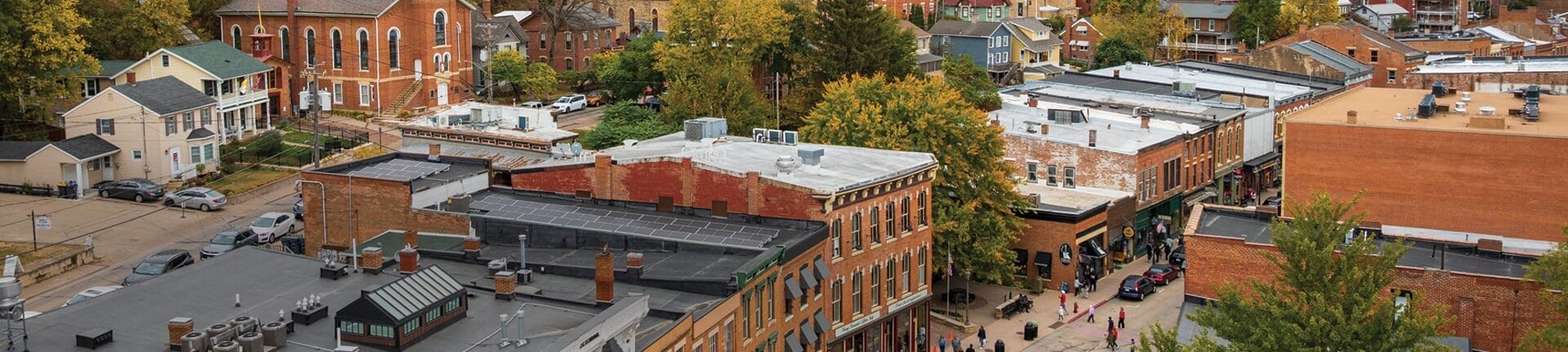
Aerial image of historic downtown center and business district

Center for Impact Finance

The Center for Impact Finance (CIF) is a nationally recognized applied research center and a trusted partner in advancing the field of community development finance. 

As of June 1, 2026, the Center for Impact Finance (CIF) is an official center of the Lincoln Institute of Land Policy.

Our Mission

The Center for Impact Finance (CIF) addresses income and wealth inequality by promoting increased access to capital for underserved communities through applied research, training, and practitioner-driven solutions. Working across a wide range of topics—from affordable housing to small business finance to clean energy and climate resilience—we collaborate closely with practitioners, funders and investors, and policymakers to design solutions that expand access to capital.

Our Work

Through applied research, training, and practitionerdriven innovations, the CIF supports stakeholders across geographies and sectors nationwide. We bring together thought leaders and practitioners to develop actionable policies, financing strategies, and tools, while strengthening the capacity of organizations and the field as a whole. Our work reflects a longstanding commitment to collaboration and building systems that deliver lasting solutions to economic, societal, and environmental challenges. 

Learn More About Our Work

Courses and Events

CIF offers a variety of courses in community development finance, clean energy finance, solar development, and resilience. Our trainings build practical skills, financial acumen, and capacity to move projects from concept to deployment and strengthen organizational sustainability.

Learn More About Courses and Events
Solr panels being used as a roof for parked cars.

Course

Introduction to Solar Finance

This short, introductory course explores why getting involved in solar lending can be a good business proposition for community-based lenders and reviews the many available options. 

Take the Course


Research and Publications

The Center for Impact Finance conducts applied research and evaluation that explores how community lenders structure and deliver financial products, manage operations, and contribute to broader community and economic outcomes. Our research helps community lenders, funders, and investors understand and respond to market needs, to help them develop new products and programs, and to inform strategic and business planning.

Learn More About Our Research and Publications
Typical Baltimore inner city row houses.

Other Publication

Clean Energy Project Development for Low-Income Communities

Scaling clean energy in low-income communities through solar and deep efficiency retrofits presents financing challenges, but that is only part of the problem. Drawing upon CIF’s research, this white paper outlines a road map depicting the ecosystem needed to deliver clean energy projects to underserved communities.

Read the Paper

History of the Center

In 2009, Dr. Michael Swack founded the Center for Impact Finance (originally called the Center for Social Enterprise and Finance) as part of the Carsey School of Public Policy at the University of New Hampshire. Earlier in his career, in 1982, Dr. Swack created the successful Master in Community Economic Development program at Southern New Hampshire University and helped found the New Hampshire Community Loan Fund in 1983 and the Opportunity Finance Network in 1984. For 15 years, he led the Center’s growth and helped expand the Master in Community Development (MCD) program at the Carsey School. In 2024, Dr. Swack stepped down from the role of director and continues to serve as a senior fellow and to teach in the MCD program. Ellen Lurie Hoffman joined the CIF as executive director in September 2024.

In 2026, the Center for Impact Finance moved to the Lincoln Institute of Land Policy. CIF’s work is rooted in the belief that finance can serve public purpose, consistent with the Lincoln Institute’s mission to transform land value into public value. This partnership contributes to the Lincoln Institute’s growing portfolio of work in catalytic capital, land policy, and systems innovation, and enables the center to expand programs and amplify our impact. Partnership with Claremont Lincoln University allows CIF to continue offering certificates and micro-credentials from an accredited university that count for credit toward a master’s degree.

Today, the CIF’s research and thought leadership extends to a wide range of topics, including small business development; affordable housing; fintech; climate resilience; and Community Development Financial Institution (CDFI) capitalization, systems, growth, and collaboration. The center is also deeply engaged in ensuring that the nation’s transition to a clean energy economy benefits low-income communities. Together with the Lincoln Institute and Claremont Lincoln University, CIF is working to advance a shared vision of sustainable, place-based economic development and bring financial expertise that is sought by so many communities around the world.

Our Experts

Headshot of Ellen Lurie Hoffman, a woman with medium length brown hair and light skin wearing a purple dress and a white jacket.

Ellen Lurie Hoffman

Executive Director, Center for Impact Finance

Washington, DC

Leader in a Land of Extremes

April 26, 2026

By Anthony Flint, April 26, 2026

The Lincoln Institute’s Mayor’s Desk series has featured municipal leaders from a wide range of metropolitan regions all over the world, but the latest installment may well be the most farflung: Fairbanks, Alaska, a city of about 30,000 people adjacent to Russia and the North Pole that was awarded the title of coldest city in America, having set a record low of minus 66 degrees Fahrenheit. Not counting any wind chill.

The place is “a land of extremes,” says Mayor Mindy O’Neall, who has had to manage a range of issues, from affordable housing to climate change, that land differently at the gateway to the Arctic. It’s a good thing, she observes, that living there brings out a special kind of resilience.

“At the heart of it is the people … who have grit and determination,” said O’Neall, the latest chief executive to be interviewed in the Mayor’s Desk series, recorded for the Land Matters podcast. The swing from frigid cold to surprisingly hot summers, and from deep darkness to strong sunlight, fosters a mindset of both abundance and scarcity. “We’re at the end of the line, we have three to four days of food security at any given time.”

O’Neall, 44, unseated an incumbent last year to become the city’s 53rd mayor. She campaigned on themes including downtown revitalization, affordable housing, and public safety, and has pursued strategies to promote generational wealth through homeownership and leverage government-owned land for affordable housing.

“Building homes and housing has been the game or the business of large, wealthy developers. And in our community, we just can’t really afford that. We don’t have enough folks for a large developer to make money here,” she said. “When we start to rethink about who’s investing in our own community and who can invest, then we start to, I think, build out that wealth, better.”

The freeze-and-thaw dynamics that have become more careening in a rapidly changing climate have also been a challenge, as the region must attempt to manage extreme occurrences ranging from floods to wildfires.

“They often call the Arctic the canary in the coal mine, because we start to see the issues of climate change far beyond and far before the lower 48 or other parts of the world. The Arctic has been saying that something’s happening in our environment for quite some time,” O’Neall said.

“I don’t think that there’s really much we can do about this now. It’s happening. We’re in a cycle of climatic disruption, for sure. But we can plan for extreme events, so we know what we’re going to do when the power goes out and it’s negative 30 degrees. We know what’s going to happen when our river floods in the middle of our town, and we’ve lost access to the hospital.

“We’re seeing less and less investment from the federal government,” she said. “So as Alaskans, it’s time for us to think really hard about how we want to protect… our assets. And that comes back to the values that we hold as a community.”

O’Neall grew up in Iowa and drove a stick-shift pickup truck up north, first working as an aide in the Alaska Legislature, then at the Fairbanks Economic Development Corporation and the Interior Gas Utility, and also founded Blue Canoe Media, a boutique communications and consulting firm. She holds a BA in Event Planning and Business Communication from Iowa State University and an MA in Professional Communications from the University of Alaska Fairbanks, where her research focused on governance and climate impacts on rural Alaska, including the relocation of Native communities.

Prior to her election as mayor, she served on the Fairbanks North Star Borough Assembly and was executive director of the Cold Climate Housing Research Center, and also serves on the boards of the Alaska State Homebuilders Association and Alaska Municipal League.

Aerial View of the Fairbanks, Alaska Skyline during Summer
Downtown Fairbanks, Alaska. Credit: Jacob Boomsma via iStock/Getty Images Plus.


She lives in downtown Fairbanks with her dog, Tito, who she pointed out is the true official dog of Alaska—the mutt. O’Neall visited Cambridge recently as part of the Just City Mayoral Fellowship at Harvard University’s Graduate School of Design, now in partnership with the Bloomberg Center for Cities.

An edited version of this Mayor’s Desk interview will appear online and in print in Land Lines magazine. The first 20 of these Q&As were compiled in the book Mayor’s Desk: 20 Conversations with Local Leaders Solving Global Problems, which includes a foreword by Michael Bloomberg.

Listen to the show here or subscribe to Land Matters on Apple Podcasts, SpotifyYouTube, or wherever you listen to podcasts.


Further Reading

Fairbanks Passes 2026 City Budget, Adds Positions | KTUU/KTVF

Climate Hazards Cost Fairbanks, Anchorage Homeowners Millions | University of Alaska News

Energy Crisis Faces Fairbanks as Well as Anchorage | Reporting from Alaska


Anthony Flint is a senior fellow at the Lincoln Institute of Land Policy, host of the Land Matters podcast, and a contributing editor of Land Lines. 


Transcript

[00:00:05] Anthony Flint: Welcome to Episode 3 of Season 7 of the Land Matters podcast. I’m your host, Anthony Flint. In our Mayor’s Desk series here at the Lincoln Institute, we interview municipal chief executives from around the world. Our latest conversation brings us all the way to Fairbanks, Alaska, a city of about 30,000 people, way up north near Russia, the gateway to the Arctic as it’s known, the second largest city in the state after Anchorage, and a metropolis that has been awarded the title of coldest city in America, having set a record low of minus 66 degrees Fahrenheit.

We’re talking with 44-year-old Mindy O’Neall, who recently replaced an incumbent and campaigned on themes including downtown revitalization, affordable housing, and public safety. She grew up in Iowa and drove a stick shift pickup truck up north, first working as an aide in the Alaska State Legislature, then the Fairbanks Economic Development Corporation and the Interior Gas Utility, and also founded Blue Canoe Media, a boutique communications and consulting firm.

She holds a BA in event planning and business communication from Iowa State University and an MA in professional communications from the University of Alaska Fairbanks, where her research focused on governance and climate impacts on rural Alaska, including the relocation of Native communities. Prior to her election as mayor, she served on the Fairbanks North Star Borough Assembly and was executive director of the Cold Climate Housing Research Center, and also serves on the boards of the Alaska State Homebuilders Association and Alaska Municipal League.

She lives in downtown Fairbanks with her dog, Tito, who, as she pointed out, is the true official dog of Alaska, the mutt. I first met her at a program for mayors at Harvard and followed up with this interview.

For the uninitiated, including those of us in the lower 48, what kind of place is Fairbanks, and why did you want to be mayor?

[00:02:22] Mayor Mindy O’Neall: Well, thanks, Anthony, and thanks for inviting me onto the show. I get this question a lot, especially for the uninitiated, as you said. That’s cute. You’re right. Fairbanks really is an exotic place. I would say we’re the land of extremes. We are extremely cold in the winter. We’re extremely warm in the summer. Some people may be surprised to learn that we can get up to 90 to 100 degrees in the summer. The force of the sun, the feeling of the sun, is so direct that it is just something you have to experience. We have exotic animals, grizzly bears, and polar bears. We have extreme industry like mining and gas and oil development. We are definitely a place of extremes.

At the heart of it is the people. It’s these people who have grit and determination, and oftentimes this mindset of abundance, where we have so much, as far as so much light, so much darkness. Then, a lot of times, this mindset of scarcity as well, where we’re at the end of the line, we have three to four days of food security at any given time. There’s things that also come into play that really just demonstrate how much of an extreme environment we live in.

Yes, wanting to be mayor. I’ve been in Alaska for over 23 years. I’m originally from Iowa, so I’m a land dweller from the middle of the United States. I came up here, just like a lot of other folks, looking for adventure. If you’ve ever been to the Midwest, they say, “Why would you ever want to leave the land, the heartland?” I said, “Don’t worry, I’ll be back in a year. I just want to go check it out.” After a year, it was painfully obvious that there was so much more to discover to Alaska that I just had to stay. I made my way up to Fairbanks from Anchorage after being there for seven years. I worked in the legislature and started to work for an interior gas utility that brought natural gas to our town.

During that time, I was an untraditional student and went back to our flagship university at the University of Alaska Fairbanks, and got a master’s in organizational development. I wrote my thesis on the politics of relocating Alaska Native villages due to climate change. At the time, I didn’t really realize how that was going to inform my career as much as it has, because after being a labor agent for the laborers. I was the executive director for the Cold Climate Housing Research Center. I spent the last four years doing that while also serving on the Borough Assembly.

One of the things that’s interesting about Alaska is we have seven boroughs that are like counties in the lower 48, and then we have cities within those boroughs. Fairbanks has a borough that has a governing body, which is the assembly, and a mayor. Then within the borough, there are two cities that have each their own mayor and each their own governing bodies. Now I am the mayor of the city of Fairbanks. I have a city council that’s a smaller council that’s located within the borough. The borough is about the size of New Jersey, with 130,000 folks in it. The city is 32,000 of those. Then the city located within the borough is the city of North Pole. They have about 2,500 folks in there.

Like a lot of places where you go from city to city in urban areas, you may or may not know what boundary you’re in. That can be sometimes a point of confusion. We always like to joke for a place that’s so against government and against overregulation, we have a lot of government regulating us.

After serving in the assembly for six and a half years, I started my public service during COVID. I think I had been appointed for about six months and then elected about four months before COVID happened. I really learned how to govern in an elected position through a screen. I do think that COVID was obviously and certainly a pivotal point in politics, but even just in the way that we communicate. That’s my passion, my heart and soul, is communication and journalism, and that sort of thing. We had a mayor that was on paper doing a fine job. He had gotten programs started and knew the city really well and led it, but he was very discriminatory to the Alaska Native population here.

After some comments and some blow-ups that he had on social media, I knew that if anybody was going to be able to beat him in an election, that I’d be able to do it. I just believe that public service is a privilege, and somebody who is in office has to have the respect of every population that is within their community. I’ve wrestled with this a little bit coming into office as, well, the last mayor, he wasn’t doing a bad job. He was actually doing a good job, but he wasn’t showing our community the respect.

I think sometimes we miss out on that key piece of public service is showing your community respect, even if you don’t understand them, even if you don’t agree with them. I think that we have lost that on a lot of levels of government these days. I believe in government. I believe that we have government for a reason. When you don’t have good governance, I do think that one of the benefits of being in this position in the last six months is being a female. This is the first time Fairbanks has had a female mayor in about two decades. I’m the fourth one since 1903.

It’s really touching to be able to be, and especially a young female in my 40s, leading this community and being a role model for other girls in our community to see that there’s somebody like them who treats a community with respect and can lead in an environment that is sometimes very hostile and sometimes very male-driven. That’s a long way of saying that’s how I ended up here.

[00:09:02] Anthony Flint: Everybody’s wrestling with affordability these days. One big part of that is housing. What are the policies that can help in your region, whether home buying or renting?

[00:09:14] Mayor Mindy O’Neall: I mentioned at the beginning that Fairbanks is at the end of the line. While that’s true, we also have an abundance of resources that are part of our economy. We have timber, we have renewable energy, we have access to gravel, and alternative methods such as mycelium. While we’re at the end of the road, we have these resources at our disposal to be innovative on how we approach housing. I think that those answers come in local manufacturing of our own resources, innovation, and then also building things like kind of part homes that have been tested for extreme environments.

We suffer from a housing stock that’s from the ’70s. Alaska really got its last big boom during the oil pipeline of the ’70s. What happened was there was such an explosion of Westerners coming up to the state that they built things the way that they knew how to build things, which was without a lot of insulation, built out of whatever they had. We suffer from very inefficient housing. When we talk about what affordable housing is, for us, it really has to include a component of energy efficiency, so we can even afford to heat our homes.

This year, we’ve had one of the coldest winters on record. I think it was the fourth coldest winter on record. We also got a remarkable amount of snow. It’s been very challenging for folks, especially now that oil prices are going up. We have about 1,200 folks in our community that are on natural gas. Everybody else is heating their homes with diesel fuel. If you think about that, we have folks who are getting delivery of diesel fuel to their homes, myself included. I live in the most urban part of our city.

Going back to affordable housing, it really does include this holistic look of what’s going to work and how we can be energy efficient with our housing, but also how we can use our local resources for innovation and how we can manufacture the resources that we have here. Secondly, and this is something that I think is really interesting, is this idea, this concept of building generational wealth outside of homeownership. That’s a model and a tool that I’d really like to explore more as we talk about how we’re building affordable housing in our community.

[00:11:45] Anthony Flint: This is this idea that not everybody has to buy a home. It’s perfectly fine to rent.

[00:11:50] Mayor Mindy O’Neall: Perfectly fine to rent, but then the next question is, how do renters gain generational wealth so they’re not just handing over money every month without anything in return? They get a house to live in, but there’s no equity in it after a while. In what ways — and I know there are models out there — when we’re building affordable housing, how can we lower the amount of investment for folks in a way that it might not come back to them for 30 to 50 years, but in 30 to 50 years, they’re on their second or third generation of family where they have security in their family in a form of tangible wealth?

[00:12:34] Anthony Flint: There’s also the community land trust model, where you have this more shared equity, and there’s limits on resale, but you still have it.

[00:12:43] Mayor Mindy O’Neall: I like that. There’s more and more folks talking about how to do this in innovative ways. I think typically building homes and housing has been the game or the business of large, wealthy developers. In our community, we just can’t really afford that. We don’t have enough folks for a large developer to make money here. When we start to rethink about who’s investing in our own community, and who can invest, then we start to, I think, build out that wealth better.

[00:13:17] Anthony Flint: The Lincoln Institute has been helping municipalities identify government-owned land that can be used for affordable housing. Do you see opportunities in that approach?

[00:13:29] Mayor Mindy O’Neall: Absolutely, I do. A few facts for you here. 60% of our land in Alaska is federal. 25% is owned by the state of Alaska. It’s about 580,000 acres. 10% is owned by Native corporations, and 1% is private. We have a lot of government land that’s available. Now, about 80 million of those acres are managed for conservation, but that’s still quite a bit of land left for us to use. I think what the Lincoln Institute is doing, exploring these different land-use models, including transportation and other components of community building, is fantastic. I can’t wait to get my hands on more of that information. I signed up for the newsletter.

We have a parking structure that has been mothballed for, gosh, probably five years. The university that used it ended up not needing it. They literally welded the doors shut, and this building has been sitting there deteriorating ever since. Through the Alaska Housing Finance Corporation, who is a statewide housing financing bank, they purchased that parking garage and have put it out for bid for affordable housing. They worked with us, saying, “Okay, we own this now, but it’s right in the middle of your city. What do you want to do with this?” We walked through the options that we have. Do we want senior housing? Yes, we desperately need senior housing. Is this the right place? We don’t think so. Okay. Next option, affordable housing, high-end housing, two bedrooms, apartment. What is it that we need? Through that process, we’ve put out an RFP for a developer to then build two or three stories on top of that parking garage, therefore activating the space using, again, the parking garage for parking, covered parking, which is very important in Fairbanks, Alaska, but also getting units into the downtown core.

That’s one example. There’s a few others that we have ongoing in town, but that’s one example that I’m really eager to see how that plays out.

[00:15:48] Anthony Flint: What are the unique challenges of living with climate change in Alaska, and what, at the state and local level, can be done about it?

[00:15:57] Mayor Mindy O’Neall: They often call the Arctic the canary in the coal mine because we start to see the issues of climate change far beyond and far before the lower 48 or other parts of the world. The Arctic has been saying that something’s happening in our environment for quite some time. I mentioned before what we’ve noticed is we have more wind in Fairbanks, which means that we have more risk for summer fires, wildfires. In the winter, we’ve had more snow than usual.

It’s also been very cold, so colder than usual, which means that our ground will not thaw quickly, meaning that when the temperature gets hot in the air, what’s going to happen? It’s all going to melt into water, but there’s going to be nowhere for it to go because the ground hasn’t unthawed yet. Now we miss out on that water. We get lots of floods, and then we don’t have moisture in the ground, and so it’s more susceptible to wildfires in the summer. That’s just one instance of the cycle of how climate change has affected the interior.

I don’t think that there’s really much we can do about this now. It’s happening. We’re in a cycle of climatic disruption, for sure, but we can plan for it. We can plan for extreme events, so we know what we’re going to do when the power goes out and it’s negative 30 degrees. We know what’s going to happen when our river floods in the middle of our town and we’ve lost access to the hospital or to hotels. We know what to do when we have an ice event because we got three or four inches of rain on top of three or four feet of snow in the middle of winter, and how that affects the animals, the moose. How it affects our ability to hunt and fish and gather berries or medicinal foods.

I think planning is a very big part of how we are prepared because, honestly, you don’t know what’s going to happen from season to season. The other thing is with planning comes money. Alaska is a place where we do not collect sales taxes on a statewide basis. Some municipalities do — we do not, as the municipality of Fairbanks — and income taxes. We pay property taxes, and that’s all we pay. As we address these more and more climatic, dramatic events, it’s costing us more and more to repair the roads, costing more and more to protect the utilities that are above and below ground, and somewhere that’s going to have to come from funding.

We’re seeing less and less investment from the federal government for events like that. As Alaskans, it’s time for us to think really hard about how we want to protect and at what level we want to protect our assets that we have, and what level of commitment that comes from our own pocketbooks.

[00:19:04] Anthony Flint: Yes, leading into that, figuring some of this stuff out at the local level or the local and state level seems to be really important right now. How have you navigated being a mayor at a time when the federal government is reducing funding and more or less withdrawing from being a partner on so many issues?

[00:19:26] Mayor Mindy O’Neall: Yes. It seems like we continue to ask our employees to do more with less. At the same time, the public expects services to be modern. That means we have to invest in technology. A lot of times, we just don’t have the funding for that. It’s a tough spot, I got to say. I have all of these ideas and plans for being mayor. Then you come into the office and you’re like, “Okay, how am I going to make this work with the operations that we already have going, the way we want to provide services and make things more efficient for our public with less and less funding from the state and from the federal government?”

Again, I do think that we’re going to have to look at ways that we contribute to ourselves, and that comes back to the values that we hold as a community. We’re a place where tourists want to be because that’s also a big part of our economy. It’s tough. I haven’t figured it out yet, but I have two and a half more years to go. It’s definitely something I’m working on a lot, and how we do more with less and how we increase, or how we explain the value of good governance with putting our own skin in the game.

[00:20:43] Anthony Flint: Mindy O’Neall is mayor of Fairbanks, Alaska, the latest leader to be interviewed in the Lincoln Institute’s Mayor’s Desk series. We love talking to mayors, and we’ve compiled 20 of these interviews in a book, Mayor’s Desk: 20 Conversations with Local Leaders Solving Global Problems, which includes a forward by Michael Bloomberg. Otherwise, Mayor’s Desk interviews appear in Land Lines magazine, in addition to most of them being broadcast here on the Land Matters podcast. You can find everything on the Lincoln Institute website. Just navigate to lincolninst.edu.

On social media, our handle is @landpolicy. Please go ahead and rate, share, and subscribe to Land Matters, the podcast of the Lincoln Institute of Land Policy. For now, I’m Anthony Flint signing off, until next time.

[00:21:41] [END OF AUDIO]

Read full transcript

El Premio Lincoln 2025 rinde homenaje al periodismo riguroso sobre el uso de suelo en América Latina

Por Jon Gorey, February 11, 2026

En agosto de 1985, los residentes de Jaguaribara, una pequeña comunidad en el estado brasileño de Ceará, recibieron la noticia de que el gobierno pensaba inundar su ciudad.

La construcción planificada de la enorme represa de Castanhão y el embalse cercano inundarían la ciudad, y toda la comunidad tendría que reubicarse y reconstruirse a 50 kilómetros de distancia. Después de años de demora y resistencia continua, la orden de trabajo oficial se firmó en 1995; en 2001, los residentes tuvieron que decir adiós con gran dolor al lugar donde vivieron, amaron y crecieron, y mudarse a una comunidad nueva y planificada construida en suelo donado por los municipios cercanos.

En una serie de varias entregas para el Jornal Diário do Nordeste llamada “Castanhão: 30 años”, la periodista Thatiany do Nascimento Pereira rastreó las diversas historias de angustia, activismo comunitario y reconstrucción colectiva que surgieron de una decisión de uso del suelo tan compleja y a gran escala. Las casas, los recuerdos y los monumentos públicos quedaron atrás, pero también quedó atrás gran parte de la segregación económica histórica de la ciudad, dado el lienzo en blanco de una nueva comunidad planificada.

En noviembre, el Instituto Lincoln de Políticas de Suelo honró a do Nascimento Pereira con el primer lugar del Premio Lincoln 2025 (Premio Lincoln) al Periodismo sobre Políticas Urbanas, Desarrollo Sostenible y Cambio Climático, en COLPIN 2025, la Conferencia Latinoamericana de Periodismo de Investigación. La 16.ª edición anual de COLPIN, celebrada en Buenos Aires, marcó el cuarto año en que se entrega el Premio Lincoln como parte de la conferencia.

El segundo lugar fue para un equipo de investigadores nicaragüenses por “Las ‘casas fantasmas’ del programa habitacional insignia de los Ortega-Murillo”, que documentó promesas incumplidas y millones de dólares faltantes en el plan de vivienda del gobierno. Debido a su trabajo, que destaca las prácticas corruptas del régimen político, los periodistas nicaragüenses ahora viven en el exilio en Costa Rica.

Massiell Largaespada, del Equipo Divergentes y Connectas, Nicaragua, recibe el Premio Lincoln al Periodismo sobre Políticas Urbanas, Desarrollo Sostenible y Cambio Climático en segundo lugar en la ceremonia de COLPIN en noviembre. Crédito: IPYS/COLPIN.

El tercer lugar fue para Mary Triny Zea Cornejo por su historia “Reubicación de una población desplazada por el aumento del nivel del mar amenaza importante área protegida”, que exploró la reubicación masiva de 300 familias de la isla Cartí Sugdup en Panamá. Los tres principales ganadores participaron en un panel de discusión en COLPIN, y otros cinco proyectos recibieron menciones honoríficas.

Entre los 266 artículos, provenientes de 19 países, publicados en una amplia variedad de medios, que incluyen videos y visualizaciones interactivas de datos, el cambio climático y la gestión del agua fueron temas repetidos, indica Laura Mullahy, gerente sénior de programas del Instituto Lincoln.

En particular, el cambio climático se convirtió en “un tema transversal, asociado con la minería, eventos climáticos extremos como huracanes, olas de calor, inundaciones, y crisis hídricas que afectan a ciudades y regiones”, agrega Mullahy. “Muchos de los artículos vinculan la conservación del suelo y la gestión del agua con megaproyectos de infraestructura, turismo y otros medios de transformación de áreas protegidas”.

Mullahy también destaca un aumento en los artículos que ven los esfuerzos de planeamiento urbano a través de la lente de la segregación, la vivienda o los asentamientos informales, donde el enfoque no está en la práctica en sí, sino en los efectos “como el desalojo, el aumento de los costos del suelo y la vivienda, y la desigualdad en el acceso a los servicios”.

El arquitecto Miguel Jurado forma parte del comité de selección del Premio Lincoln desde el principio; su función es revisar cientos de artículos que se presentan al concurso cada año, y destaca que la profundidad de las obras presentadas ha madurado en ese período. “Del énfasis inicial en conservación y cambio climático se avanza hacia tramas que conectan clima, territorio, desigualdad y estructuras económicas”, indica.

Centrado en el uso del suelo y cómo funcionan las ciudades, el Premio Lincoln “abrió nuevas tendencias temáticas para el periodismo investigativo en la región”, comenta Adriana León, del IPYS (Instituto Prensa y Sociedad), con sede en Lima, Perú, que organiza COLPIN. “Para el IPYS y para la COLPIN, el Premio Lincoln es un aporte esencial en el objetivo de contribuir al ejercicio del buen periodismo”.

Personas sentadas en la conferencia COLPIN levantan sus brazos y sonríen.
Los asistentes a la conferencia COLPIN participan en una actividad inspirada en TikTok para romper el hielo. Crédito: IPYS/COLPIN.

A continuación, encontrará los ganadores del Premio Lincoln 2025 al Periodismo sobre políticas urbanas, desarrollo sostenible y cambio climático, junto con enlaces a su trabajo (vea los ganadores de 2024 aquí).

Ganadores del Premio Lincoln 2025

Primer premio: Thatiany do Nascimento Pereira, Brasil, por la serie “Castanhão: 30 años desde que comenzó la construcción”, publicada en el Jornal Diário do Nordeste.

La narrativa de múltiples ángulos reflexiona sobre cómo la construcción de la represa más grande de Brasil, iniciada hace tres décadas, transformó para siempre la ciudad de Jaguaribara en el estado nororiental de Ceará, e inundó por completo la ubicación original. Mediante la combinación de recuerdos, fotografías antiguas y los testimonios de quienes vivieron este desplazamiento, la serie explora las tensiones sociales, políticas y culturales que surgen del proyecto, y revela el dolor de la pérdida, pero también las formas en que la comunidad resistió y reconstruyó su identidad a pesar del desplazamiento.

Segundo premio: Equipo Divergentes y Connectas, Nicaragua, por “Las ‘casas fantasmas’ del programa habitacional insignia de los Ortega-Murillo”.

El gobierno nicaragüense había prometido construir 50.000 viviendas para 2026, pero ahora informa que solo se entregarán 6.000 en todo el país. Mediante imágenes satelitales, los investigadores nicaragüenses demostraron que el plan de vivienda de Managua solo se había completado en un 27 por ciento, a pesar de las afirmaciones oficiales de que toda la inversión se había desembolsado por completo. Eso deja un déficit de USD 30 millones y más de 4.000 viviendas sin construir en los dos desarrollos planificados. La investigación también reveló que el financiamiento del Banco de Fomento de la Producción (BFP) y bancos privados implica tasas de interés cercanas al 10 por ciento anual, lo que significa que, durante 25 años, una familia terminará pagando más del doble del valor de la casa. Esta situación, que ocurre en medio de retrasos de tres a cuatro años en la entrega, benefició a las empresas afiliadas al régimen político.

Tercer premio: Mary Triny Zea Cornejo, Panamá, por “Reubicación de una población desplazada por el aumento del nivel del mar amenaza importante área protegida”, publicado por Mongabay Latam.

Panamá llevó a cabo la primera reubicación masiva debido al aumento del nivel del mar en América Latina, y trasladó a 300 familias de la isla Cartí Sugdup, la isla más poblada del archipiélago indígena Guna Yala, al continente. Sin embargo, el nuevo asentamiento afecta a 11 hectáreas de bosque dentro del Corredor Biológico Mesoamericano, una de las áreas protegidas más importantes del país. Este artículo reveló que el estudio de impacto medioambiental omitió los efectos a largo plazo sobre la biodiversidad y la amenaza a la identidad cultural del pueblo Guna. Aunque el gobierno presenta la reubicación como un “proyecto emblemático para la adaptación al cambio climático”, los expertos advierten que su implementación fue defectuosa y podría exacerbar la degradación medioambiental.

Mención de honor 1: Jorge Dett, Perú, por “ Vecinos afectados por construcción de viviendas sociales en distritos urbanos ¿Negocio encubierto?” para Latina Televisión.

Los distritos de la capital peruana de Lima, como San Isidro, Surco y Miraflores, conocidos por sus altos precios inmobiliarios, ahora cuentan con edificios con unidades de hasta 40 metros cuadrados, resultado de la implementación de una nueva Ley de Viviendas de Interés Social. Esta legislación permite la construcción en áreas previamente restringidas, lo que llevó a un aumento desproporcionado y no regulado en la construcción y densificación de edificios debido a regulaciones poco claras y, en ocasiones, contradictorias.

Mención de honor 2: María Luzdary Ayala, María Gabriela Ensinck, María Belén Galeano, Eirinet Gómez, Sergio Rincón, Judith Scheyer, Flávia Schiochet, Kennia Velázquez, Ahiana Figueroa, Maximiliano Manzoni, Juan David Olmos y Suhelis Tejero, CONNECTAS, PopLab (México), EcoGuia (Colombia), O Joio e o Trigo (Brasil), Argentina + Sustentable (Argentina), Consenso (Paraguay) y TalCual (Venezuela), por “Agua por ultraprocesados: un mal negocio para América Latina”.

Este informe colaborativo revela excesos, abusos e inequidades en el volumen de agua otorgado a través de concesiones a industrias de alimentos ultraprocesados en las cuatro economías más grandes de América Latina. La investigación encontró que las regulaciones débiles, los controles inadecuados y el cabildeo corporativo se combinan para facilitar el consumo excesivo de agua, a menudo a precios muy bajos, en áreas que ya experimentan una grave escasez de agua. Esta situación agrava el problema de la desigualdad del agua para las comunidades vulnerables.

Mención de honor 3: Judith Herrera Cabello, Chile, por “Cambio climático: ¿cómo podría influir la Corte Interamericana de Derechos Humanos en las políticas que tomen los países?”, publicado por la Revista Hiperlatidos, Chile.

Este informe examina la opinión consultiva solicitada por Chile y Colombia a la Corte Interamericana de Derechos Humanos (CIDH) sobre las responsabilidades de los gobiernos nacionales en el abordaje del cambio climático y el impacto en sus territorios y ciudadanos. El artículo se centra en dos temas principales: el proceso ante la CIDH y sus posibles efectos en las políticas públicas de los países involucrados; y los impactos del cambio climático en Chile, como la sequía, los incendios forestales y el aumento de las temperaturas.

Mención de honor 4: Kenneth Andrei Pérez y Arturo Contreras Camero, México, por “¿Dónde vamos a vivir?” para Capital 21.

A través de experiencias personales y análisis de expertos, esta serie de videos de seis episodios explora los fenómenos que impulsaron los precios de la vivienda en la Ciudad de México en los últimos años. La serie busca explicar, desde una perspectiva tanto internacional como nacional, cómo se transita la crisis de la vivienda en esta ciudad, así como las posibles soluciones o alternativas que existen para analizarla.

Mención de honor 5: Neil Marks, Guyana, por “Billions in Carbon Revenues Helping Amerindian Communities with Economic, Social, Cultural Advancement (Miles de millones en ingresos por bonos de carbono para contribuir al desarrollo económico, social y cultural de las comunidades amerindias)”, publicado por Newsroom Guyana.

Guyana obtiene ingresos por la preservación de su selva tropical, que cubre más del 85 por ciento del país, y en un solo año pudo distribuir más de USD 3.800 millones en fondos de créditos de carbono a 232 comunidades indígenas como parte de su Estrategia de Desarrollo Bajo en Carbono (Low Carbon Development Strategy, LCDS 2030).  Este informe detalla cómo el pueblo indígena de River’s View reconstruyó un muelle y espacios culturales a través del programa. Si bien algunas organizaciones expresaron su preocupación por la transparencia y la participación genuina en la gestión de estos recursos, según el principio de consentimiento libre, previo e informado (CLPI), las comunidades deciden por sí mismas cómo invertir los fondos en infraestructura, educación u otras áreas de progreso económico o cultural.


Jon Gorey es redactor del Instituto Lincoln de Políticas de Suelo.

Imagen principal: El embalse creado por la represa brasileña Castanhão, cuya construcción forzó la mudanza de una comunidad entera hace 30 años. Una serie reciente que explora ese desplazamiento ganó el primer lugar del Premio Lincoln annual para periodismo sobre el uso de suelo en América Latina. Crédito: Viktor Braga vía Flickr CC.

Fellows in Focus

Decodificar la corrupción en el desarrollo económico urbano

Por Jon Gorey, February 5, 2026

El Instituto Lincoln ofrece diversas oportunidades para investigadores que se encuentran a inicios o mitad de sus carreras. En esta serie, hacemos un seguimiento de nuestros becarios para conocer más sobre su trabajo.

Hace varios años, se dio a conocer una importante operación encubierta del FBI en Tallahassee, Florida. Los agentes federales se habían infiltrado en el gobierno de la ciudad, haciéndose pasar por promotores inmobiliarios, y sobornaron con éxito a los funcionarios de desarrollo económico local para ganar votos y contratos.

Kerry Fang, que enseñaba en la Universidad Estatal de Florida en Tallahassee en ese momento, observó cómo se producían múltiples arrestos y se dictaban condenas. Y en la valiosa colección de correspondencia por correo electrónico, registros de reuniones y otras pruebas presentadas que se hicieron públicas, Fang, ahora profesora adjunta de Planeamiento Urbano en la Universidad de Illinois en Urbana-Champaign, vio una valiosa oportunidad de investigación.

“Pude obtener todo ese material, que es especialmente rico y difícil de encontrar, y analizar la existencia de patrones específicos de comunicación en proyectos de corrupción. ¿Podemos ver algunas pistas de corrupción en los intercambios de correos electrónicos?”, comenta Fang. “Ahora estoy trabajando en un libro que analiza la corrupción en los proyectos de desarrollo económico en su conjunto, porque, desafortunadamente, en realidad es más común de lo que pensamos”.

¿El título del libro? “El título provisional es The Most F—d Up Place: An Anatomy of Corruption in Urban Economic Development (El lugar más j—dido: anatomía de la corrupción en el desarrollo económico urbano)”, agrega Fang. La blasfemia proviene de la colorida descripción de la causa de Tallahassee por parte de un agente del FBI.

Fang comenta que sus estudiantes en ese entonces estaban consternados, desalentados y motivados por el escándalo de corrupción. “Estoy muy orgullosa de algunos de mis antiguos estudiantes en el estado de Florida, porque me escucharon hablar de esto en clase y se enojaron”, agrega. “Una de mis exalumnas se postuló para la oficina del comisionado de la ciudad en Tallahassee, y ahora se enorgullece de ser parte de la oficina del comisionado de la ciudad”.

En 2020, Fang recibió una beca internacional del programa de China del Instituto Lincoln de Políticas de Suelo para estudiar los impactos de la tenencia del suelo en la salud de los niños en la China rural. La investigación de su documento de trabajo resultante se publicó el año pasado en la revista revisada por pares Feminist Economics.

En esta conversación, que se editó por motivos de longitud y claridad, Fang comparte más información de su investigación, por qué los planificadores deben aprender a navegar la política local y por qué considera que la acción y la investigación son antídotos contra la desesperanza.

JON GOREY: ¿Cuál es el enfoque general de la investigación? ¿Y cómo cree que la beca del Instituto Lincoln contribuyó en ese trabajo?

KERRY FANG: El enfoque principal de mi investigación es la política de uso de suelo y su impacto en la equidad y la sostenibilidad, así como la política de desarrollo económico. Ambos campos son pilares muy, muy importantes del urbanismo, y también tienen una conexión estrecha entre sí.

La beca Lincoln me ayudó muchísimo. Al criarme en China [donde, antes de 2003, los derechos colectivos de uso del suelo en las aldeas rurales solían asignarse por tamaño de hogar y redistribuirse de forma periódica], la pregunta particular que me interesaba era: ¿la prohibición de la redistribución de los derechos de uso del suelo, que tenía como objetivo poner fin a la inestabilidad de los hogares rurales, tiene consecuencias no deseadas al negar los derechos al uso del suelo a las mujeres y los niños que llegaron a una aldea después de la prohibición? ¿Esta situación afectaría su posición dentro de la familia, y afecta la forma en que la familia distribuye los recursos?

Gran parte de la investigación previa se centró en la familia en su conjunto, con la siguiente premisa: si la familia se beneficia, todos se benefician. Todos sabemos que no es eso lo que sucede ¿Quién es el jefe de la familia, quién está en verdad a cargo de los recursos de la familia? En especial en el contexto de la China rural, el hombre de la casa es el que tendrá los recursos, y ahora también puede ser el único que puede gozar de los derechos sobre el uso del suelo. ¿Y qué significa eso?

Me fascinó la pregunta y, con la beca Lincoln, pude hacer la encuesta y preguntar explícitamente quién tiene derechos sobre el suelo dentro de un hogar, y analizar cómo eso afecta la distribución de recursos y la salud de los niños, que se está convirtiendo en un problema en China. Descubrí que, cuando se les niega a los niños los derechos sobre el suelo, su salud se deteriora y es más probable que sean obesos. Si la esposa, es decir la madre, tiene derechos sobre el suelo, es más probable que la familia tenga una mejor cobertura de salud. Y si una niña tiene derechos sobre el suelo, es más probable que el padre pase tiempo con su hija.

JG: ¿En qué está trabajando ahora o en qué le gustaría trabajar a futuro?

KF: Respecto del uso del suelo, siempre analicé la transferencia de los derechos de desarrollo. [Mientras estaba en la Universidad Estatal de Florida], comencé a colaborar con otros académicos que están muy interesados en la adaptación costera, y comencé a considerar el uso de la transferencia de los derechos de desarrollo como una herramienta para facilitar la adaptación costera. Porque, en teoría, es la herramienta que puede transferir los derechos de desarrollo de las áreas de alto riesgo a las áreas de menor riesgo. Entonces, tiene sentido, pero las aplicaciones prácticas son muy escasas.

Solo hay un puñado de programas con aplicaciones en los Estados Unidos. Hasta ahora, hubo estudios teóricos o estudios de caso individuales que no rastrearon en forma sistemática el desempeño o los diversos desafíos a los que se enfrentaron. Es por eso que comencé este trabajo, para en verdad analizar estas aplicaciones existentes del uso de la transferencia de los derechos de desarrollo para la adaptación costera y realizar un seguimiento sistemático de su desempeño.

En el otro frente del desarrollo económico, analicé cómo los planificadores se comunican con los políticos y si la comunicación modelará las decisiones de estos últimos. También estoy colaborando con algunos científicos informáticos para hacer un poco de minería de texto en los intercambios de correo electrónico de la causa Tallahassee, para tratar de ver si podemos encontrar pistas de corrupción en este material. ¿Es posible detectar la corrupción a partir de estos intercambios?

Durante muchos años, estudié economía desde una perspectiva más racional. Somos planificadores racionales que tratan de descubrir lo que es mejor para la ciudad, hacemos análisis de costo-beneficio para proyectos públicos a fin de determinar qué es lo correcto para la ciudad. ¿Pero es eso lo que está pasando en realidad? Muchas de estas cuestiones tienen una fuerte influencia de la política, las dinámicas de poder y, a veces, la corrupción rotunda. Es probable que encuentre casos de corrupción en casi todas las grandes ciudades de Estados Unidos si busca “corrupción en el desarrollo del suelo” o en el desarrollo económico.

Y los grandes proyectos que requieren tanto subsidio público se terminan aprobando de todos modos, a pesar de la abrumadora evidencia empírica que indica que los megaproyectos, en su mayoría, no dan frutos. Se aprueban de cualquier forma. Mi libro analizará ese tema de manera explícita, mostrando lo que está sucediendo, la dinámica de poder y el desequilibrio de poder que se infiltra en los proyectos de desarrollo económico urbano, y presentando algunas de las señales que debemos buscar, para verlo suceder en cada etapa del desarrollo, y señales de advertencia para que podamos ser capaces de detectarlo.

JG: ¿Hay algo que la haya sorprendido o resultado inesperado durante toda su investigación?

KF: La parte de la corrupción sin duda me sorprendió. Es decir, no soy ingenua, sé que hay corrupción. No me había dado cuenta de lo arraigada que está en nuestras vidas y lo extendida que está, porque no hablamos de ello tan a menudo, en especial en los Estados Unidos. En la literatura, se trata como un problema de los países en vías de desarrollo.

Una gran parte sucede exactamente en mi ámbito de estudio, en el desarrollo del suelo y el desarrollo económico, porque ahí es donde está el dinero, ahí es donde está el poder. Y es más probable que nosotros, capacitados como planificadores, funcionemos como técnicos en estos organismos gubernamentales. Tenemos experiencia técnica, pero en realidad no somos muy buenos para navegar el panorama político.

JG: ¿Qué le gustaría que más gente entendiera sobre el urbanismo, el uso del suelo o el desarrollo económico?

KF: Que están conectados, y eso es realmente importante. Siento que estamos un poco sobreespecializados en distintas cuestiones y que nos aislamos en diferentes categorías.

Una gran parte de lo que hago es tratar de generar conexiones. Por lo tanto, mi trabajo en uso de suelo y planificación medioambiental intenta establecer una conexión entre el uso del suelo para promover la planificación medioambiental y la adaptación costera, lo que también apoya el desarrollo económico, la sostenibilidad social y la equidad en general. Y mi trabajo en corrupción y desarrollo económico en verdad está conectando el desarrollo económico y el desarrollo del suelo con la política urbana y la gobernanza urbana.

No se puede mirar desde una única perspectiva sin tener en cuenta a las demás. El sistema urbano es un sistema integral.

JG: Me intrigó una de las clases que imparte, Informática Urbana. ¿Puede contarme sobre este término y algo del periodismo de datos que han hecho sus estudiantes?

KF: Esta es una clase de pregrado que solo impartí una vez hasta ahora, pero estamos tratando de que nuestros estudiantes puedan usar los datos de manera efectiva para resolver problemas de urbanismo. La clase consta de tres módulos. El primero incluye métodos estadísticos, así como mapeo y análisis espacial, que son muy importantes para la planificación. El segundo módulo se centra en visualización de datos y periodismo de datos, porque la comunicación efectiva [es muy importante]; como planificadores, no solo tenemos que ser capaces de usar los datos, sino que tenemos que pensar en cómo comunicar los datos a nuestra audiencia y a diferentes tipos de audiencias. Es decir, tenemos que visualizar los datos de manera efectiva, mapearlos y contar una historia con los datos.

Y en el último módulo, llevo a mis estudiantes a la vanguardia de los métodos de aprendizaje automático, como la extracción de datos web (web scraping), el análisis de punto de interés (POI, por sus siglas en inglés), la minería de textos y los gráficos interactivos. Todas las novedades a las que, como urbanista, estará cada vez más expuesto: nuevos datos, nuevos métodos, datos en tiempo real que serán muy importantes en la gestión de las ciudades.

La clase del año pasado analizó diferentes barrios en Chicago con el objetivo de observar las diferentes características demográficas y económicas. Y como todos sabemos, no es que sea particularmente impactante, pero sigue siendo muy sorprendente ver a los estudiantes extraer los datos y visualizarlos, para exponer con claridad cuánta disparidad espacial hay en Chicago. Integraron muchas buenas técnicas de visualización que aprendieron en clase para hacer mapas muy efectivos. Y pudieron contar una muy buena historia sobre las fuerzas impulsoras de todos estos fenómenos y las marcadas diferencias que vemos: cuáles son algunas de las políticas y fuerzas sociales detrás y qué pueden hacer los planificadores para analizar esos problemas.

JG: En lo que respecta a su trabajo, ¿qué la mantiene despierta por la noche? ¿Y qué le da esperanza?

KF: Tanto la cuestión del poder político como la del clima. Ambas son las crisis de nuestro tiempo y, en días oscuros, siento que no tenemos esperanza en ambos frentes. El poder político es tan poderoso que a veces pienso en cómo puedo contrarrestarlo. La cuestión climática es un problema enorme que necesita mucha colaboración global, pero cada uno se cuida a sí mismo. Eso es lo que me mantiene despierta por la noche.

Para mí, lo que resulta empoderante es poder hacer algo. Creo que eso es parte de por qué estudio la política de uso de suelo para contribuir a facilitar la adaptación costera a los problemas climáticos y la dinámica de poder y el proceso político en el desarrollo económico urbano. Ambas son formas de mantener la cordura y hacerme sentir que estoy haciendo algo. También hago publicaciones al respecto todo el tiempo para, en primer lugar, concientizar sobre estos temas. Incluso si yo, como individuo, no puedo cambiar las cosas, si más personas se enteran, tal vez pueda llevarlas a la acción, como las de mis estudiantes. Es algo que me enorgullece.

En especial, en lo que respecta a la adaptación costera, sentí que mi trabajo podía generar implicaciones concretas y prácticas que pueden incorporarse directamente en la práctica. Como estoy en conversaciones con los planificadores a cargo de estos programas de transferencia de los derechos de desarrollo, en verdad puedo ayudarlos a ejecutar mejor sus programas. Y, si ese es el caso, puedo ayudar a algunas de estas comunidades a enfrentar el problema del cambio climático un poco mejor, y eso me hace sentir empoderada y con más esperanza para el futuro.


Jon Gorey es redactor del Instituto Lincoln de Políticas de Suelo.

Imagen principal: Kerry Fang, profesora adjunta de Planificación Urbana y Regional en la Universidad de Illinois Urbana-Champaign. Crédito: Foto de cortesía.