Topic: Conservación del suelo

Global Conservation

International Land Conservation Network Appoints Regional Representatives
By Katharine Wroth, Octubre 19, 2020


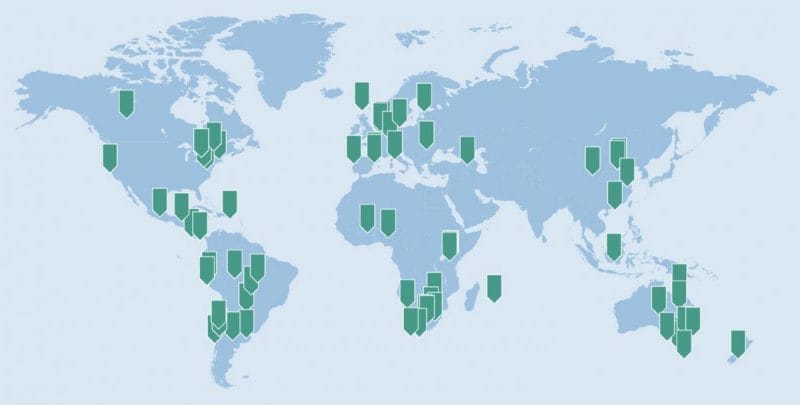
The onset of the pandemic led the International Land Conservation Network (ILCN) to recast plans for a global conservation congress earlier this year, shifting from an in-person gathering for 300 people in Barcelona to a series of virtual webinars. Like many organizations, ILCN saw a surprising benefit emerge from this unexpected change of plans: its webinar series received more than 1,100 registrations from conservation practitioners in 83 countries, and targeted sharing of series recordings in countries including China has expanded that reach into the thousands.

That experience led ILCN to recognize an opportunity: combining targeted, regional outreach with the global reach enabled by virtual tools and strategies could help strengthen engagement throughout the land conservation community. This fall, the organization appointed regional representatives on six continents. “By bringing on this core group of experienced regional representatives, we’re hoping to encourage a more robust exchange of expertise and ideas,” said Chandni Navalkha, program manager for Land Conservation at the Lincoln Institute.

The newly appointed representatives will utilize their deep experience in private and civic land conservation to build upon existing relationships in each region — through meetings and conversations held in person or virtually as the evolving global context allows — and forge new connections with leading practitioners and experts. They will bring their expertise to the broader ILCN community through webinars, newsletter articles, and other channels and, in turn, share resources, news, and strategies related to private and civic land conservation in other geographies with key stakeholders in the region they are representing. In China, for example, regional representative Shenmin Liu will join the steering committee of the China Civic Land Conservation Alliance (CCLCA), where she will share the evolving strategies and policies through which civic conservation efforts will be included in the planning for a new Chinese national park system.


ILCN works across six continents to protect and steward landscapes. Credit: International Land Conservation Network.

“We are honored to have recruited such a diverse and accomplished group of conservationists to serve as our regional ambassadors,” noted Jim Levitt, director of the ILCN. In early October, Levitt hosted a virtual meet and greet that provided a forum for the representatives to introduce themselves to each other and to members of the ILCN network from around the world. The representatives each spoke for a few minutes about their work, as well as the challenges and opportunities ahead:

  • Europe: Tilmann Disselhoff. Disselhoff manages the European Land Conservation Network (ELCN), an EU-wide network of organizations active in private land conservation that “wouldn’t have been possible without the help of ILCN,” he said. Disselhoff spoke about the power of collaboration and about plans for expanding the work of ELCN.
  • Australasia: Cecilia Riebl. A policy advisor for Australia’s Trust for Nature, Riebl spoke about obstacles and progress in the region: “This sector has a profound and compelling cause: it is absolutely critical to addressing the global biodiversity crisis, and increasingly will need to do this in dynamic ways, by introducing new actors to conservation and finding creative ways to finance it.”
  • Latin America: Hernan Mladinic. Mladinic, of Chile, has worked in conservation for more than 30 years and recently concluded a 10-year stint as executive director of Tompkins Conservation, which promotes landscape-scale conservation in South America. In the context of COVID and climate change, Mladinic said, “conservation will have to strategically link social, environmental, and economic issues.”
  • Asia: Shenmin Liu. A research analyst at the Lincoln Institute who grew up in Beijing, Liu described China’s conservation efforts and the tension between conservation and economic growth in developing countries in Asia. Liu sees a “huge need for multidirectional knowledge exchange” and will work with regional NGOs ahead of the meeting of the Conference of the Parties (COP-15) of the Convention on Biological Diversity (CBD)in Kunming, China, in May 2021.
  • North America: Shawn Johnson. As managing director of the Center for Natural Resources and Environmental Policy at the University of Montana, Johnson was instrumental in helping to launch the Lincoln Institute’s Large Landscape Peer Learning Initiative. “We think about land conservation as something we do on the side,” he said. “But conservation is critical to the health and well being of our society . . . how do we create the connections that will help us heal as we move forward?”
  • Africa: Kiragu Mwangi. Mwangi, a senior capacity development manager for BirdLife International who is currently based in the United Kingdom, grew up in Kenya and says stronger collaboration is needed between land conservation groups in Africa and elsewhere. “Partnerships are made even more rich when we collaborate and partner with people from different backgrounds,” he said, “for it is in diversity that we draw on the great wealth of knowledge and experiences to help achieve greater impacts with our work.”

Citing the urgency of advancing innovation in land conservation in light of the upcoming Convention on Biological Diversity COP-15 meeting in China, as well as the growing momentum behind the global campaign to protect 30 percent of the earth’s surface by 2030 (30×30), Levitt said the virtual gathering, and the promise of an increasingly connected and collaborative approach to conservation, gave him hope. “It’s not only humbling to be in this group, I hope it’s also emboldening,” Levitt said at the conclusion of the meet and greet. “To know there is a group of people all over the world with the courage and strength and intelligence to prepare a world our great-grandchildren can enjoy . . . . The more connections we make now, the more connections we will make going forward.”


Katharine Wroth is the editor of Land Lines.

Photograph: Aerial View over Okavango Delta in Botswana. Credit: Gfed/Getty Images Plus.


Related

Fernando Lloveras San Miguel of the Conservation Trust of Puerto Rico Wins the Kingsbury Browne Fellowship and Conservation Leadership Award


International land Conservation Network Launches Webinar Series

Land Conservation

Fernando Lloveras San Miguel of the Conservation Trust of Puerto Rico Wins the Kingsbury Browne Fellowship and Conservation Leadership Award
Octubre 12, 2020


Fernando Lloveras San Miguel, executive director of the Conservation Trust of Puerto Rico, has been named the new Kingsbury Browne Fellow at the Lincoln Institute of Land Policy and the recipient of the Kingsbury Browne Conservation Leadership Award from the Land Trust Alliance (LTA).

For the past 17 years, Lloveras has led the Trust, which manages and protects Puerto Rico’s natural areas, runs habitat and species restoration initiatives, and implements coordinated public awareness campaigns, among other activities. Under his leadership, the Trust has received the Seal of the Land Trust Accreditation Commission and been accepted into the International Union for Conservation of Nature, becoming the only organization in Puerto Rico to receive this distinction. Since 2012, Lloveras has also served as president of Para la Naturaleza, a unit of the Trust which aims to protect 33 percent of natural ecosystems in Puerto Rico by 2033. He served on the board of the Land Trust Alliance from 2011 to 2020 and will serve on the board of the National Trust for Historic Preservation through November 2020.

Prior to joining the Conservation Trust of Puerto Rico, Lloveras cofounded Microjuris.com, which provides digital legal and legislative information and tools to users in Puerto Rico, Chile, Argentina, and Venezuela. He holds a B.A. in Economics from Dartmouth College, an M.P.P. from the Harvard Kennedy School of Government, and a J.D. from the University of Puerto Rico.

“Fernando Lloveras is both a great practitioner of land conservation in Puerto Rico and an outstanding international ambassador for the idea that land and biodiversity conservation is a global enterprise to which we can all contribute,” said Jim Levitt, who leads the Lincoln Institute of Land Policy’s land conservation efforts. “He is personable, very bright, and has a deep passion for the land. We are proud to have the chance to work with him over the coming year as the new Kingsbury Browne Fellow at the Lincoln Institute of Land Policy.”


Fernando Lloveras San Miguel. Credit: Para La Naturaleza.

The Kingsbury Browne fellowship and award, given since 2006, are named for Kingsbury Browne, a Boston tax lawyer and conservationist who served as a Lincoln Fellow in 1980 and helped to form the LTA in 1982. Lloveras San Miguel was officially recognized at Rally 2020, LTA’s annual gathering of land conservation professionals, which this year attracted over 3,700 virtual attendees. During 2020–2021, Lloveras will engage in research, writing, and mentoring at the Lincoln Institute.

Previous recipients of the fellowship include Jane Difley, who led the society for the Protection of New Hampshire Forests for 23 years; Michael Whitfield, executive director of the Heart of the Rockies Initiative, who has built partnerships among landowners, civic leaders, government officials, and scientists to protect iconic landscapes in the Rocky Mountain West; Will Rogers, head of The Trust for Public Land; David Hartwell, an environmental leader who has helped mobilize billions of dollars for conservation projects across Minnesota; Steve Small, a legal pioneer who paved the way to make conservation easements tax-deductible in the U.S.; Jean Hocker, a former president of the LTA and longtime board member at the Lincoln Institute; Larry Kueter, a Denver attorney specializing in agricultural and ranchland easements in the West; Peter Stein, managing director of Lyme Timber Company; Audrey C. Rust, president emeritus of the Peninsula Open Space Trust based in Palo Alto, California; Jay Espy, executive director of the Elmina B. Sewall Foundation; Jamie Williams, president of The Wilderness Society; Laurie A. Wayburn, cofounder of the Pacific Forest Trust; Mark Ackelson, president of the Iowa Natural Heritage Foundation; and Darby Bradley, president of the Vermont Land Trust.

About the Lincoln Institute

The Lincoln Institute of Land Policy seeks to improve quality of life through the effective use, taxation, and stewardship of land. A nonprofit private operating foundation whose origins date to 1946, the Lincoln Institute researches and recommends creative approaches to land as a solution to economic, social, and environmental challenges. Through education, training, publications, and events, we integrate theory and practice to inform public policy decisions worldwide.

About the Land Trust Alliance

Founded in 1982, the Land Trust Alliance is a national land conservation organization that works to save the places people need and love by strengthening land conservation across America. The Alliance represents 1,000 member land trusts supported by more than 200,000 volunteers and 4.6 million members nationwide. The Alliance is based in Washington, D.C., and operates several regional offices. More information about the Alliance is available at www.landtrustalliance.org.


Photograph courtesy of Para La Naturaleza.


Related

International Land Conservation Network Appoints Regional Representatives


Jane Difley of the Society for the Protection of New Hampshire Forests Wins the Kingsbury Browne Fellowship and Conservation Leadership Award


Oportunidades de becas de posgrado

2020 C. Lowell Harriss Dissertation Fellowship Program

Fecha límite para postular: March 16, 2020 at 6:00 PM

The Lincoln Institute's C. Lowell Harriss Dissertation Fellowship Program assists Ph.D. students, primarily at U.S. universities, whose research complements the Institute's interests in land and tax policy. The program provides an important link between the Institute's educational mission and its research objectives by supporting scholars early in their careers.

For information on present and previous fellowship recipients and projects, please visit C. Lowell Harriss Dissertation Fellows, Current and Past


Detalles

Fecha límite para postular
March 16, 2020 at 6:00 PM

Descargas

Jane Difley stands outside

Land Conservation

Jane Difley of the Society for the Protection of New Hampshire Forests Wins the Kingsbury Browne Fellowship and Conservation Leadership Award
By Emma Zehner, Noviembre 11, 2019


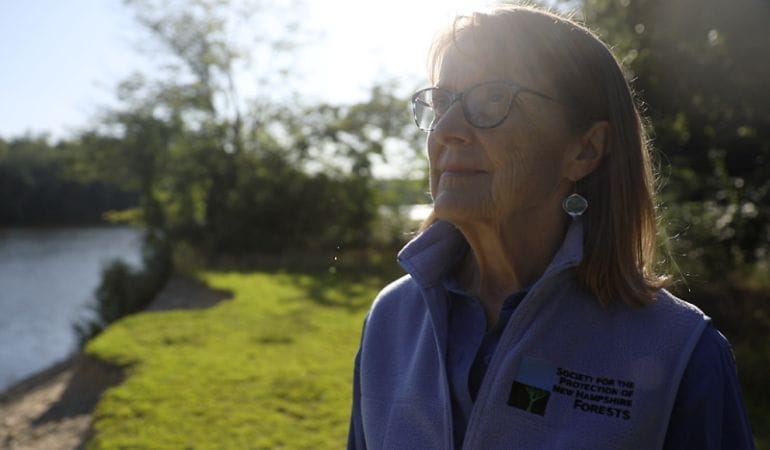
Jane Difley, a forester and conservation pioneer who led the Society for the Protection of New Hampshire Forests (the Forest Society) for 23 years, has been named the new Kingsbury Browne Fellow at the Lincoln Institute of Land Policy and the recipient of the Kingsbury Browne Conservation Leadership Award from the Land Trust Alliance (LTA).

Difley, who served as an intern with the Forest Society in graduate school, returned to lead the organization in 1996, doubling the size of its conserved Forest Reservations to 56,000 acres during more than two decades as president. Under her leadership, the Forest Society played a pivotal role in the creation of the Land and Community Heritage Investment Program (LCHIP), a state authority that supports the conservation and preservation of New Hampshire’s natural and cultural resources. LCHIP has since made 240 grants to land conservation and historic preservation projects in 141 communities across the state, protecting a total of 260,000 acres and 142 historic structures in the process. Difley retired from the organization this fall. (Listen to an extensive New Hampshire Public Radio interview with Difley about the shifts she has observed in land conservation and forest management throughout her career.)

Before her tenure at the Forest Society, Difley served as executive director of the Vermont Natural Resources Council and as vice president of forestry programs and national director of the American Tree Farm system at the American Forest Foundation. She was the first woman to serve as the president of the Society of American Foresters.

“Jane Difley has had a remarkable career as a pioneering leader in conservation. She is certainly beloved in New Hampshire, where she served at the helm of the Society for the Protection of New Hampshire Forests for the past 23 years,” said Jim Levitt, who leads the Lincoln Institute of Land Policy’s land conservation efforts. “Under her leadership, the Forest Society has helped to protect about 300,000 acres, its epic advocacy efforts to block a major transmission line through the heart of the state has succeeded, and it continues to be a leading force for conservation education from Nashua to the Canadian border.”

The Kingsbury Browne fellowship and award, given since 2006, are named for Kingsbury Browne, a Boston tax lawyer and conservationist who served as a Lincoln Fellow in 1980 and helped to form the LTA in 1982. Difley was officially recognized at Rally 2019, the LTA’s annual gathering of land conservation professionals, held in October in Raleigh, North Carolina. During 2019–2020, Difley will engage in research, writing, and mentoring at the Lincoln Institute.

Previous recipients of the fellowship include Michael Whitfield, executive director of the Heart of the Rockies Initiative, who has built partnerships among landowners, civic leaders, government officials, and scientists to protect iconic landscapes in the Rocky Mountain West; Will Rogers, head of The Trust for Public Land; David Hartwell, an environmental leader who has helped mobilize billions of dollars for conservation projects across Minnesota; Steve Small, a legal pioneer who paved the way to make conservation easements tax-deductible in the U.S.; Jean Hocker, a former president of the LTA and longtime board member at the Lincoln Institute; Larry Kueter, a Denver attorney specializing in agricultural and ranchland easements in the West; Peter Stein, managing director of Lyme Timber Company; Audrey C. Rust, president emeritus of the Peninsula Open Space Trust based in Palo Alto, California; Jay Espy, executive director of the Elmina B. Sewall Foundation; Jamie Williams, president of The Wilderness Society; Laurie A. Wayburn, cofounder of the Pacific Forest Trust; Mark Ackelson, president of the Iowa Natural Heritage Foundation; and Darby Bradley, president of the Vermont Land Trust. 

About the Lincoln Institute

The Lincoln Institute of Land Policy seeks to improve quality of life through the effective use, taxation, and stewardship of land. A nonprofit private operating foundation whose origins date to 1946, the Lincoln Institute researches and recommends creative approaches to land as a solution to economic, social, and environmental challenges. Through education, training, publications, and events, we integrate theory and practice to inform public policy decisions worldwide. For more information visit www.lincolninst.edu.

About the Land Trust Alliance

Founded in 1982, the Land Trust Alliance is a national land conservation organization that works to save the places people need and love by strengthening land conservation across America. The Alliance represents 1,000 member land trusts supported by more than 200,000 volunteers and 4.6 million members nationwide. The Alliance is based in Washington, D.C., and operates several regional offices. More information about the Alliance is available at www.landtrustalliance.org.


Photograph Credit: Land Trust Alliance.

Oportunidades de becas

Postdoctoral Fellows at Peking University-Lincoln Institute Center for Urban Development and Land Policy

Fecha límite para postular: November 15, 2019 at 11:59 PM

The Peking University-Lincoln Institute Center for Urban Development and Land Policy (PLC) was founded jointly by Peking University (PKU) and Lincoln Institute of Land Policy in 2007. Located on the campus of PKU in Beijing, the PLC is a research and educational institution and a policy think-tank. The PLC brings together scholars in related fields from China and abroad to carry out comprehensive, interdisciplinary, data-based empirical analysis and policy research.

The PLC is now accepting applications for two two-year postdoctoral fellow positions. The application deadline is November 15, 2019.


Detalles

Fecha límite para postular
November 15, 2019 at 11:59 PM

Descargas


Palabras clave

conservación, medio ambiente, vivienda, uso de suelo, finanzas públicas, políticas públicas, desarrollo urbano

Reflexión

Atravesar antes de transeccionar
Por Anuradha Mathur, Julio 31, 2019

Ian McHarg me introdujo a la transección ecológica. Me situó de una forma única en la tierra donde hacía poco había llegado como estudiante desde la India, a 12.000 kilómetros de distancia. No solo estaba en Filadelfia; estaba en una línea dibujada desde los montes Apalaches que pasaba por la meseta Piedmont y llegaba a la llanura costera y el Océano Atlántico. La transección me resultaba familiar, ya que había aprendido acerca de la Sección del Valle de Patrick Geddes, a partir de su trabajo en la India en la década de 1910. Según sus palabras, era “esa pendiente general desde la montaña hasta el valle que encontramos en todas partes del mundo”.1

Sin embargo, la transección no solo me situaba; también ofrecía un punto en común a los estudiantes de mi clase, que provenían de cinco continentes distintos. Cultivaba una visión del paisaje que llevaríamos a todas partes. Para muchos de nosotros, era como estar de nuevo en nuestros hogares.

Cada semana, llegábamos a un punto en la transección: las minas de carbón cerca de Scranton, el campo de rocas en la zona de Pocono, los bosques del Wissahickon, los prados cerca de Valley Forge, las cascadas de Manayunk, los lodazales y canales de Pine Barrens y las dunas en la costa de Jersey. Cavábamos fosas en el suelo, identificábamos vegetación, buscábamos pistas acerca de qué había sobre la superficie terrestre y debajo de esta, y en nuestras notas de campo armábamos el rompecabezas de la historia seccional de la tierra. En el taller, trabajábamos en grupos y nos familiarizábamos con sitios particulares de la transección. Cada uno de ellos era un área de 65 kilómetros cuadrados, representada por un mapa topográfico en el que identificábamos distintos suelos, vegetación, usos del suelo, laderas y geología. Resaltábamos las líneas de arroyos, terrenos anegables, humedales y acuíferos, y construíamos distinciones evidentes entre rasgos que pertenecían al suelo y los que pertenecían al agua. Si bien los mapas de base eran los mismos todos los años, usábamos una escala de 1 centímetro por 60 metros (1 pulgada por 500 pies) y nos enorgullecíamos de elegir nuestra paleta de colores, que se extendía en gradientes sutiles de verde, azul y marrón, tal vez en un intento por disolver los límites impuestos por el mapa, que no se correspondían con nuestra experiencia en el campo. Pero era inevitable que la transección en el campo retrocediera hasta ser un recuerdo distante, a medida que el mapa se convertía en el sitio principal de análisis y diseño. Después de todo, permitía hacer capas con la información de múltiples disciplinas sobre la misma superficie geográfica. Como estudiantes de diseño y planificación, nuestra tarea era responder al mapa. Esta fue nuestra experiencia en el taller 501 en la Universidad de Pensilvania en 1989, el taller de paisajismo fundamental iniciado por Ian McHarg y Narendra Juneja en uno de sus últimos años.

Diez años más tarde, me tocó enseñar el taller de paisajismo fundamental.2 No llevaba a los alumnos a la transección de mis días como estudiante, sino a un lugar a partir del cual pudieran construir su propia transección. Llevaban cintas métricas, hilo, niveles improvisados, lápices, papel periódico, fichas y tiza. No llevaban mapas para orientarse, solo las páginas en blanco de sus cuadernos de bocetos, para empezar a negociar un terreno desconocido. Yo los alentaba a caminar, no tanto para que encontraran el camino, sino para que hicieran el propio. Algunos se abrían camino entre arroyo y cresta, otros entre bosque y restos industriales, y otros tantos entre humedales y corredores de infraestructura. Al igual que los supervisores de caminos frente a los ejércitos, a cargo de mapear territorios desconocidos, triangulaban entre puntos y los conectaban con líneas de vista y medición. Aprendían a prestar atención a los puntos que seleccionaban. Algunos eran fijos; otros, efímeros. También aprendían a valorar las líneas que los conectaban, y prestaban particular atención a la línea entre tierra y agua. Esta línea estaba colmada de controversia. Se sabía que cambiaba todos los días y todas las estaciones; pero en una tierra de colonos, también cambiaba a discreción. Aprendían a valorar la humedad en todas partes (en el suelo, el aire, las plantas, las rocas, las criaturas), en vez de aceptar la presencia del agua tal como se indicaba en los mapas. El terreno no se agotaba con una sola caminata. Cada vez, se caminaba de un modo diferente. Luego de triangular, los alumnos esbozaban, seccionaban y fotografiaban con ojos y oídos sintonizados en la medición y el movimiento, el material y el horizonte, la continuidad y la ruptura. Habían aprendido a ver cómo se disolvían estas distinciones y fronteras, y ahora empezaban a articular nuevas relaciones y límites.

Los alumnos aprendían qué se necesitaba para hacer un mapa. También aprendían qué se necesitaba para armar una transección. Se necesitaba atravesar. Atravesar es el acto de viajar por un terreno con el objetivo de registrar descubrimientos y también imponer una nueva imaginación. En este sentido, ya diseñaban mientras armaban una transección. El diseño estaba en los ojos con los que veían, las piernas con las que caminaban, las decisiones que tomaban, los instrumentos con los que medían. Aprendían lo que Geddes y McHarg sabían muy bien: que el paisaje y el diseño emergen en simultáneo en el acto de atravesar para armar una transección.

El trabajo en las paredes y los escritorios de los alumnos suscitaba una sonrisa y una fuerte inhalación, características de McHarg cada vez que entraba en mi taller 501, con las cuales expresaba un aprecio por las secciones y triangulaciones que se bocetaban en grafito, los montajes fotográficos que se armaban y los moldes de yeso que se preparaban. Era un aprecio que solo podría provenir de alguien que sabía que la transección le debía a la acción de atravesar.

Hoy, llevo a alumnos de talleres más avanzados a lugares de conflicto, pobreza y tragedia presente, como Bombay, Bangalore, las Ghats occidentales de la India, los desiertos de Rayastán, Jerusalén y Tijuana. Estos son lugares en laderas propias de montañas al mar, laderas que, según lo que creían Geddes y McHarg, “estaban en todas partes del mundo”. Pero soy muy consciente, como lo habrían sido ellos, de que estas “transecciones” son producto de los caminos atravesados por “diseñadores” previos a nosotros: agrimensores, exploradores, colonizadores, conquistadores. Sus transgresiones extraordinarias articularon los paisajes que se convirtieron en lo ordinario de estos lugares, incluso lo que se da por sentado como natural y cultural, suelo y agua, urbano y rural. En resumen, crearon las bases del conflicto de hoy. Sin duda, lo menos que podemos hacer en nombre de McHarg y Geddes es volver a atravesar estos lugares, atrevernos a una nueva imaginación que no necesariamente pretenda resolver problemas, sino mantener la transección viva como agente de cambio.


Anuradha Mathur, arquitecta y arquitecta paisajista, es profesora en el Departamento de Arquitectura Paisajista de la Escuela de Diseño Stuart Weitzman, Universidad de Pensilvania. Escribió junto a Dilip da Cunha Mississippi Floods: Designing a Shifting Landscape (Inundaciones en Mississippi: diseñar un cambio en el paisaje)Deccan Traverses: The Making of Bangalore’s Terrain (Travesías en Deccan: cómo se hizo el terreno de Bangalore) y Soak: Mumbai in an Estuary (Empapar: Bombay en un estuario). Ambos coeditaron Design in the Terrain of Water (Proyectar en el territorio del agua).


Notas

1 Patrick Geddes, “The Valley Plan of Civilization”, Survey 54 (1925): 288–290.

2 Estuve a cargo del taller 501, el taller de paisajismo fundamental en el Departamento de Arquitectura Paisajista de la Universidad de Pensilvania, entre 1994 y 2014, con algunas pausas en el medio. Durante este período, tuve la oportunidad de trabajar junto a Katherine Gleason, Mei Wu y Dennis Playdon, y a partir de 2003, con mi compañero Dilip da Cunha. Les debo muchísimo a estos colegas, en especial a Dennis y Dilip, quienes aportaron estructura, opiniones profundas y un gran nivel de habilidad al 501, y me enseñaron el verdadero significado de atravesar un terreno.