

Our Work
The PLACE campaign builds off the Lincoln Institute’s past work to inform federal policy on how best to repurpose suitable public land for the development of affordable housing. Public land—physical space owned collectively by the public and administered by municipal, regional, or national government—includes not only parks and green space but also places like surface parking lots, vacant parcels, institutional land, government buildings, and large swathes of urban and already-developed areas. Repurposing underutilized public land for public benefits like affordable housing, nature-based solutions, and infrastructure can make communities better places to live while optimizing use of land that we the people already own.
A national, parcel-level ownership analysis by the Center for Geospatial Solutions, the geospatial services arm of the Lincoln Institute, found more than 276,000 acres of government-owned land in transit-accessible, urban areas with existing infrastructure—places often close to jobs and schools. If built upon, it could add more than 6.9 million homes to our current housing stock. While federal land comprises approximately 5,200 acres of that total, the real opportunity lies with state and local governments, which hold most of the prime public real estate nationwide. For every acre of developable federal land, there are more than 52 acres controlled by state and local governments. What’s more, land unsuitable for housing still has potential for public good—primarily by affording nature-based solutions to other social challenges.
State and local leaders are already beginning to act, but they need data and evidence to ensure the right land is developed, at the right speed and scale, in the right places, accounting for land and water constraints that affect both livability and conservation. Furthermore, communities that have taken steps to identify opportunities in public land often encounter current legal frameworks and processes that hinder the release of such land. The Lincoln Institute’s experts, cutting-edge analytical tools, and first-class learning channels will support this effort to ensure the nation’s public land is leveraged more effectively and sustainably.
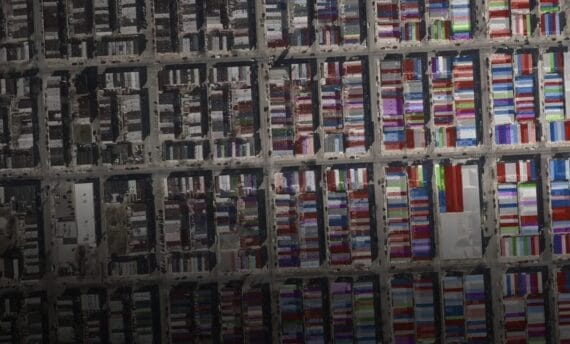
Examining Government-Owned Land for Affordable Housing
An analysis from the Center for Geospatial Solutions (CGS) provides a parcel-level examination of development potential on federal, state, and local land. The findings, which leverage CGS’s Who Owns America® analysis, offer a comprehensive, data-driven assessment of development potential on government-owned land across the United States.

Lincoln Vibrant Communities
The Lincoln Vibrant Communities initiative is a 24-week program combining in-person education with an online curriculum. In place-based teams and with cohorts, leaders tackle municipal challenges in their communities through expert coaching and advanced leadership training, leading to a nine-credit graduate certificate.